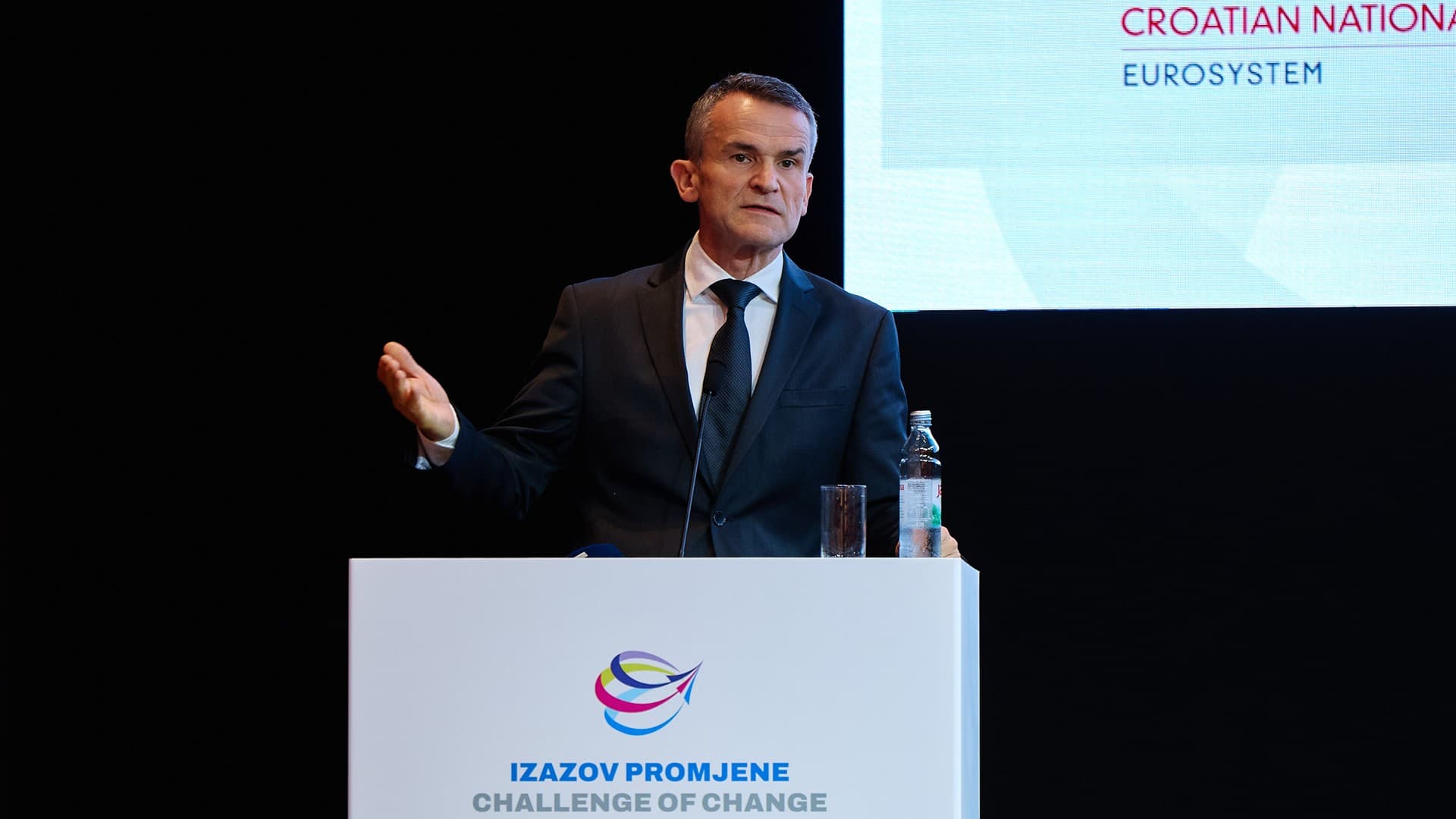
"Global economic uncertainty remains very high, but the Croatian economy has so far shown remarkable resilience in the face of a series of external shocks. Inflation is expected to slow down gradually in the period ahead, but the main risks for a more adverse inflation scenario continue to stem from the potential further escalation of the conflict with Iran and adverse weather conditions that may amplify price pressures", the CNB Governor Ante Žigman noted today in his opening speech "Between Tailwinds and New Storms: Which Course Will the Economy Take?", given at the conference "Challenge of Change", organised in Poreč by the Zagreb Stock Exchange and the Association of Pension Fund Management Companies and Pension Insurance Companies.
The Governor said that, despite the recent acceleration of inflation driven by higher energy prices, both overall and core inflation were expected to slow down over the projection horizon. These trends should be driven by the weakening domestic demand, wage growth slowdown, subdued foreign demand for tourist services and the expected fall in energy prices. However, adverse geopolitical events and weather extremes could cause additional inflationary pressures.
Particular attention should be paid to the uncertainties surrounding the war in the Middle East and developments in energy prices. Alternative adverse scenarios point to the possibility of lower economic growth and higher inflation than envisaged in the baseline projection. In such circumstances, further increases in energy prices could weaken households’ purchasing power and undermine consumer and business confidence.
"The Croatian economy has grown much faster in recent years than its pre-pandemic trend, and solid, albeit more moderate, growth is expected to continue in the coming period. After the 3.4% growth recorded in 2025, economy could slow down to 2.4% in 2026, mainly due to the weaker domestic demand, slower real income growth and more restrictive fiscal policy. At the same time, Croatia’s exports of goods and services show relative resilience despite the complex international environment. This is why it is essential to preserve the competitiveness of the Croatian economy and accelerate productivity growth, especially given adverse demographic trends", said the Governor, adding that maintaining strong economic growth in the long term requires more investment in human capital, innovation and technological progress.
Speaking of the wider European environment, he said that the European economy was facing growing structural challenges. The China shock 2.0 is increasingly hitting the European industrial base, in particular the automotive and chemical sectors, with the rise of Chinese imports further intensifying the pressures on competitiveness and employment in these industries.
"Europe is simultaneously facing the growing competition from China, energy and raw materials dependencies, and the challenge of lagging behind in AI development. It is precisely the ability to respond to these structural changes that will strongly determine its future economic position", stated the Governor, noting that the overall global uncertainty also weighs on the mounting long-term pressures on Croatia’s public finances resulting from increased defence financing needs and demographic changes linked to population ageing.
"We are not facing a storm yet, and hopefully we never will, but we need to keep adjusting the sails. Even though Croatia’s public debt is still relatively moderate, the concurrent funding of defence needs along with the pension system and the health and long-term care system is gradually reducing the available room for other development priorities. The Croatian financial and banking sectors continue to be stable and resilient. Croatia has many advantages that can help it meet the challenges, but maintaining stability and continuing convergence towards the more developed EU members calls for continued economic policies that will boost economic productivity and further improve the quality and efficiency of public services", concluded Governor Žigman.