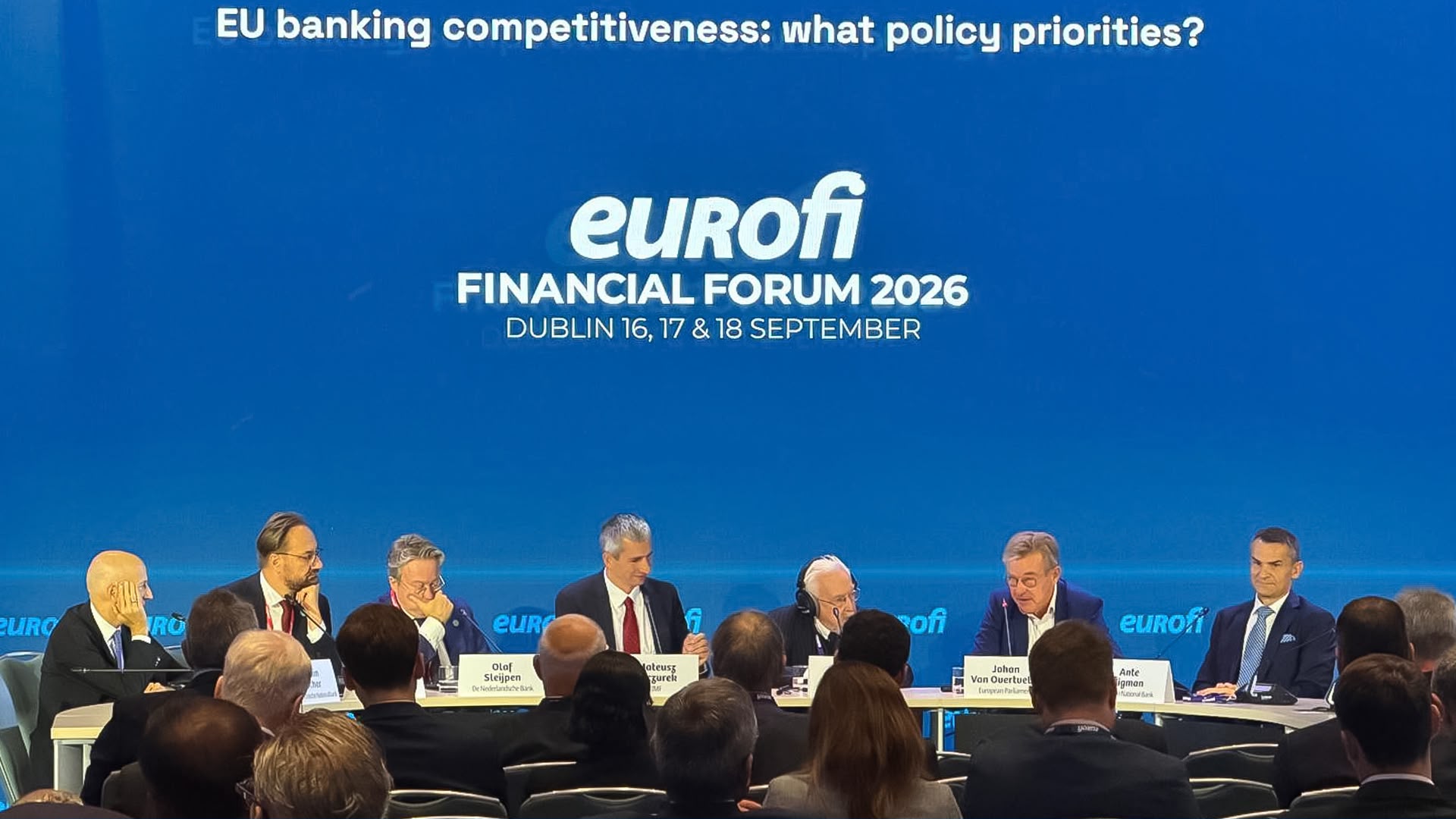
Today, Governor Ante Žigman participated in a panel discussion "Monetary policy role with resurgent inflation, weak growth and high public debt” at the Eurofi Financial Forum held in Dublin.
Among other things the panel discussed the possible responses of central banks to inflationary shocks that may be temporary in origin but may have a lasting impact on the economy, and to what extent such temporary energy and geopolitical shocks could generate more persistent inflationary pressures through second-round effects, expectations and fiscal responses, even after the initial shock has waned. An interesting discussion was initiated by the question whether continually low or even negative real interest rates, abundant liquidity and large bank balance sheets indicate that monetary conditions are still expansive and not restrictive.
By commenting on the monetary policy challenges, Governor Žigman stressed that amid strong geopolitical uncertainties and consequently rising energy prices, the euro area objective remains clear – to maintain the inflation rate at 2% in the medium term. This is how we can interpret the Fed's latest move of raising interest rates and thus turning its long-standing announcements into action. The Governor added that in the circumstances of changes in the central bank balance sheet, the Eurosystem has in place an operative framework based on demand for liquidity which ensures that banks have liquidity available when they need it, together with efficient control of short-term interest rates and reduction of their volatility. This approach, he stressed, enables monetary policy implementation without the need to precisely assess the level of reserves required by the banking system in advance and ensures the independence of the process of central bank balance sheet reduction from interest rate management. As surplus liquidity gradually diminishes, it is expected that Eurosystem refinancing operations will be used more frequently, with transitions being accompanied by a moderate increase in volatility of market interest rates and their mild growth, concluded the CNB Governor.
Discussing different central banks' approaches in communicating their monetary policy, the Governor stressed that the central banks' communication over the past year gradually diverged from the explicit guidelines on future monetary policy movement and relied more frequently on explaining the reactive function, and on communication based on scenarios amid conditions of increased uncertainties. Scenario analysis, he underlined, helps the public and market participants to understand the possible economic outcomes and associated risks, whereby it is key that the scenarios are clear and understandable so as to efficiently steer expectations.
At the same time, he added, large central banks' communication may also affect the financial conditions outside of their economies, by spilling over to interest rates, bond yields and exchange rates in other regions of the world.
In addition to Governor Žigman, the panel gathered Mateusz Szczurek, Director of the European Department of the IMF, who moderated the event, as well as speakers from other central banks, Martin Kocher, Governor of the Oesterreichishe Nationalbank, Olaf Sleijpen, President of De Nederlandische Bank, Gediminas Šimkus, Chairman of the Board of the Bank of Lithuania, as well as Johan Van Overtveldt, Chair and MEP of the Committee on Budgets of the European Parliament, and Jacques de Larosière, the Honorary President of EUROFI.